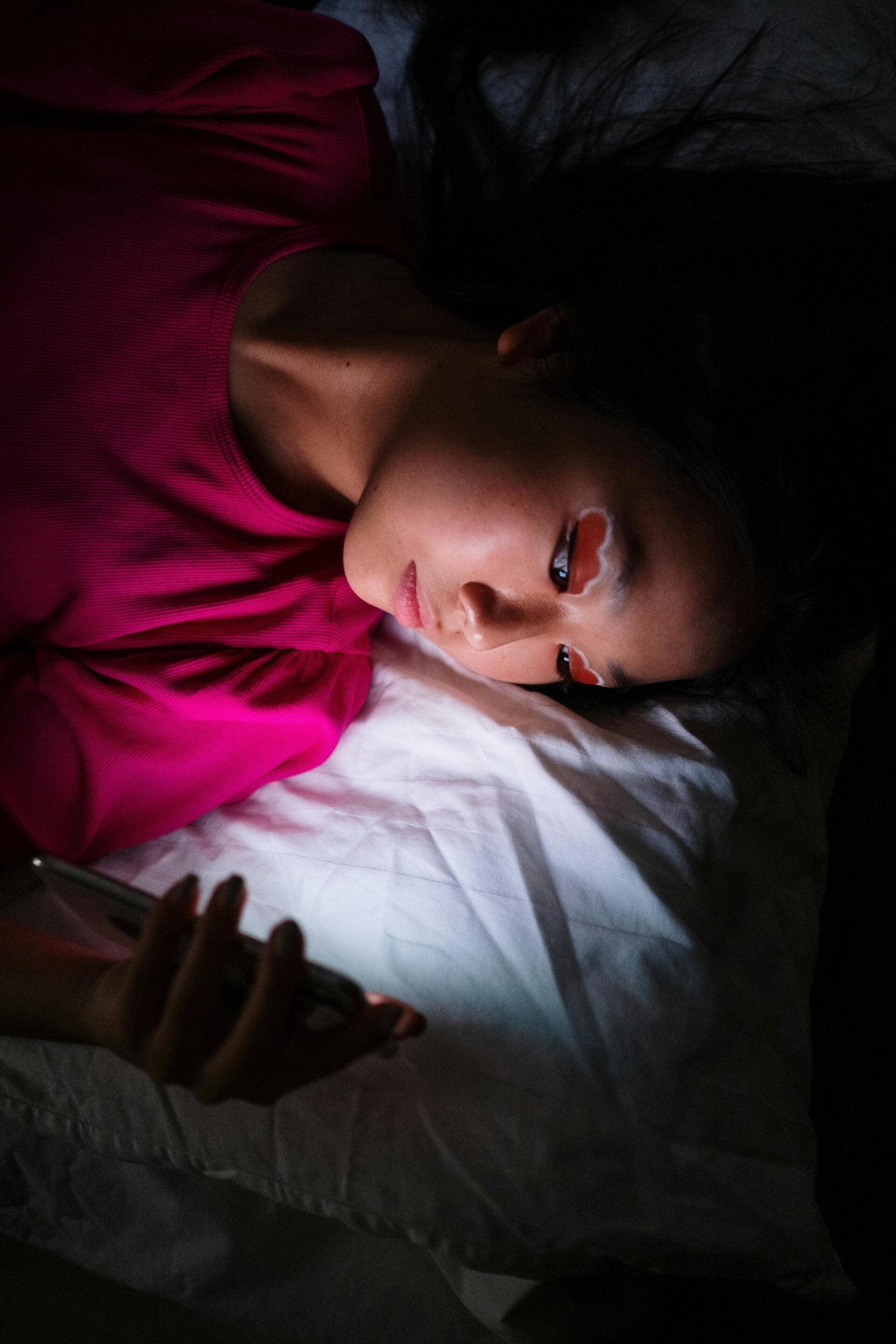
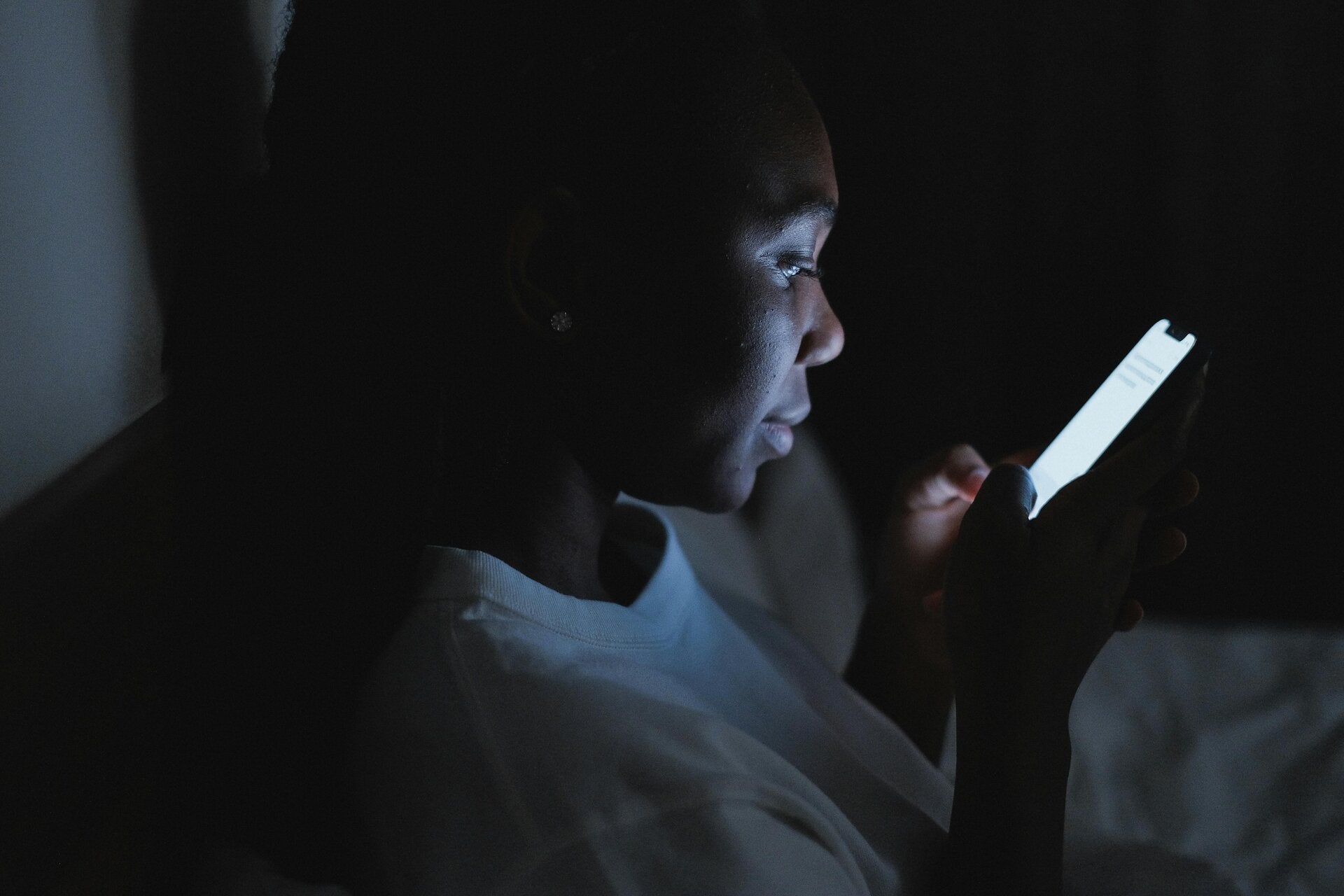
It’s 2:14 AM. The world outside your window is silent, tucked away in that deep, velvet stillness of the early morning. But inside your room, there is a different kind of energy. There is the soft, blue-white glow of a screen reflecting off your face as you scroll through a feed that seems to have no end. You told yourself you’d put the phone down at midnight. Then 12:30. Then 1:00. Now, as the minutes tick toward dawn, you feel a strange mix of being wired and completely exhausted, a state of "tired but wired" that has become all too familiar.
If this sounds like your typical Tuesday night, you aren’t alone. For many teens and women in their early 20s, the late-night scroll isn't just a habit; it’s a ritual, a way to decompress after a day of being "on" for everyone else. But there is a hidden cost to this midnight connection. At Liminal Women's Psychiatry & Wellness, we often talk about the "liminal spaces", those in-between moments of transition where we are neither here nor there. The space between wakefulness and sleep is one of the most sacred liminal spaces we have, and right now, our screens are crowding it out.
The Science of the "Internal Sunset"
Our bodies are beautifully tuned to the rhythm of the earth. For thousands of years, our internal clocks, the circadian rhythm, followed the rising and setting of the sun. As evening approaches, your brain is designed to begin an "internal sunset." This is when the pineal gland starts releasing melatonin, the hormone that signals to every cell in your body that it’s time to rest, repair, and reset.
However, the light emitted by our phones, tablets, and laptops is heavily weighted in the blue spectrum. To your brain, this blue light looks exactly like high-noon sunlight. When you stare into a screen late at night, you are effectively telling your brain, "The sun is still up! Stay alert! Stop the melatonin!"
This creates a biological tug-of-war. Your body is physically exhausted from the demands of school, work, and social navigation, but your brain is being chemically tricked into staying awake. Even if you manage to fall asleep immediately after putting the phone down, the quality of that sleep is often compromised. Research shows that late-night screen use delays the onset of REM sleep, the deep, restorative stage where we process emotions and consolidate memories. Without enough REM, you wake up feeling like your brain is wrapped in cotton wool, making it harder to face the challenges of the coming day.
Why Everything Feels Heavier at 3 AM
Have you ever noticed that a problem that feels manageable at 2 PM feels like an absolute catastrophe at 3 AM? There is a reason for that. When we are sleep-deprived, the communication between the emotional center of our brain (the amygdala) and the logical, decision-making center (the prefrontal cortex) begins to fray.
For young women in their late teens and early 20s, the prefrontal cortex is still in its final stages of development. This part of the brain is responsible for perspective, impulse control, and regulating big emotions. When we rob it of sleep, we are essentially turning down the volume on our ability to stay grounded.
This is where the cycle of stress begins. You stay up late because you’re stressed and want to distract yourself. The screen time disrupts your sleep. The lack of sleep makes your brain more reactive to stress the next day. By the time evening rolls around again, your anxiety is higher than it was before, making it even harder to put the phone down and find rest. It’s not a lack of willpower; it’s a physiological loop that can feel impossible to break on your own.
The Digital Noise: More Than Just Light
It’s not just the light from the screens that impacts our mental health; it’s the content we consume. The internet never sleeps, and for many in their early 20s, there is a profound pressure to stay connected. Whether it’s responding to a group chat, keeping up with a streak, or falling down a "rabbit hole" of short-form videos, our brains are being hit with constant micro-projections of adrenaline and dopamine.
Every notification is a mini-stimulant. Every "like" or comment is a hit of dopamine that keeps us coming back for more. But beneath that, there is often a low-level hum of social comparison and FOMO (fear of missing out). Watching a curated highlight reel of someone else’s life while you are sitting in the dark in your pajamas can trigger feelings of inadequacy, loneliness, and "not-enoughness." These feelings don't just stay in the phone; they seep into our identity and our sense of peace.
At Liminal Women's Psychiatry & Wellness, we view mental health as a full-picture experience. We cannot separate your emotional well-being from your physical habits or your digital environment. When you are in a season of change, transitioning from high school to college, or from college into the workforce, your internal resources are already being stretched thin. Adding the weight of chronic sleep disruption and digital overstimulation can lead to a sense of burnout before your adult life has even fully begun.
Finding Your Soft Landing
We aren't here to tell you to delete your apps or throw your phone in a drawer at 8 PM. We live in a digital world, and connection is a vital part of being human. Instead, we want to invite you to consider a more compassionate, person-centered approach to your evenings, a way to create a "soft landing" for your day.
Regaining clarity doesn't happen overnight, but it does happen through small, intentional shifts. Here are a few ways to start honoring that liminal space between day and night:
- The "Sunset Hour": Try to create a buffer zone. Even 30 minutes of "screen-free" time before bed can help your melatonin levels begin to rise naturally. Use this time for something that feels grounding: a warm shower, reading a physical book, or simply stretching.
- Acknowledge the "Unsettling" Feelings: Often, we scroll because we don't want to be alone with our thoughts. If you find yourself reaching for your phone the moment you feel anxious, try to acknowledge that feeling without judgment. "I'm feeling unsettled right now, and that’s okay."
- Dim the Lights: If you must use your phone, use the "night shift" or "blue light filter" settings. Dim the ambient lights in your room as well. It’s a signal to your nervous system that the day is winding down.
- Charging Outside the Bed: If your phone is the first thing you touch in the morning and the last thing you touch at night, it has a significant amount of power over your emotional state. Try charging it across the room or in a different space entirely.
Stepping Into a Season of Balance
If you feel like you’ve lost your sense of emotional balance, please know that this is a very common experience during these years of transition. The pressures of being a young woman today are immense, and the digital landscape adds a layer of complexity that previous generations didn't have to navigate.
Sometimes, the "fog" of late-night habits and chronic stress becomes too thick to navigate alone. That is where professional, compassionate support comes in. At Liminal Women's Psychiatry & Wellness, we don't look at sleep or screen use as "bad habits" to be punished. We look at them as signals: clues that tell us something about what your brain and heart are looking for. Perhaps you're looking for connection, or perhaps you're looking for an escape from the weight of expectations.
Our approach is thoughtfully individualized. We work with you to understand the full picture of your life: your biology, your environment, and your personal goals. Whether it’s through evidence-based psychiatric care, therapy, or lifestyle adjustments, our goal is to help you regain your steadiness.
You deserve to feel rested. You deserve to wake up feeling capable of handling whatever the day brings. You deserve a relationship with technology that serves you, rather than one that drains you.
The journey toward emotional balance is not a quick fix; it is a process of reclaiming your time and your peace. If you’re ready to start that journey, we are here to walk alongside you. Let’s work together to find that version of you who feels clear, grounded, and truly awake to the possibilities of her life.